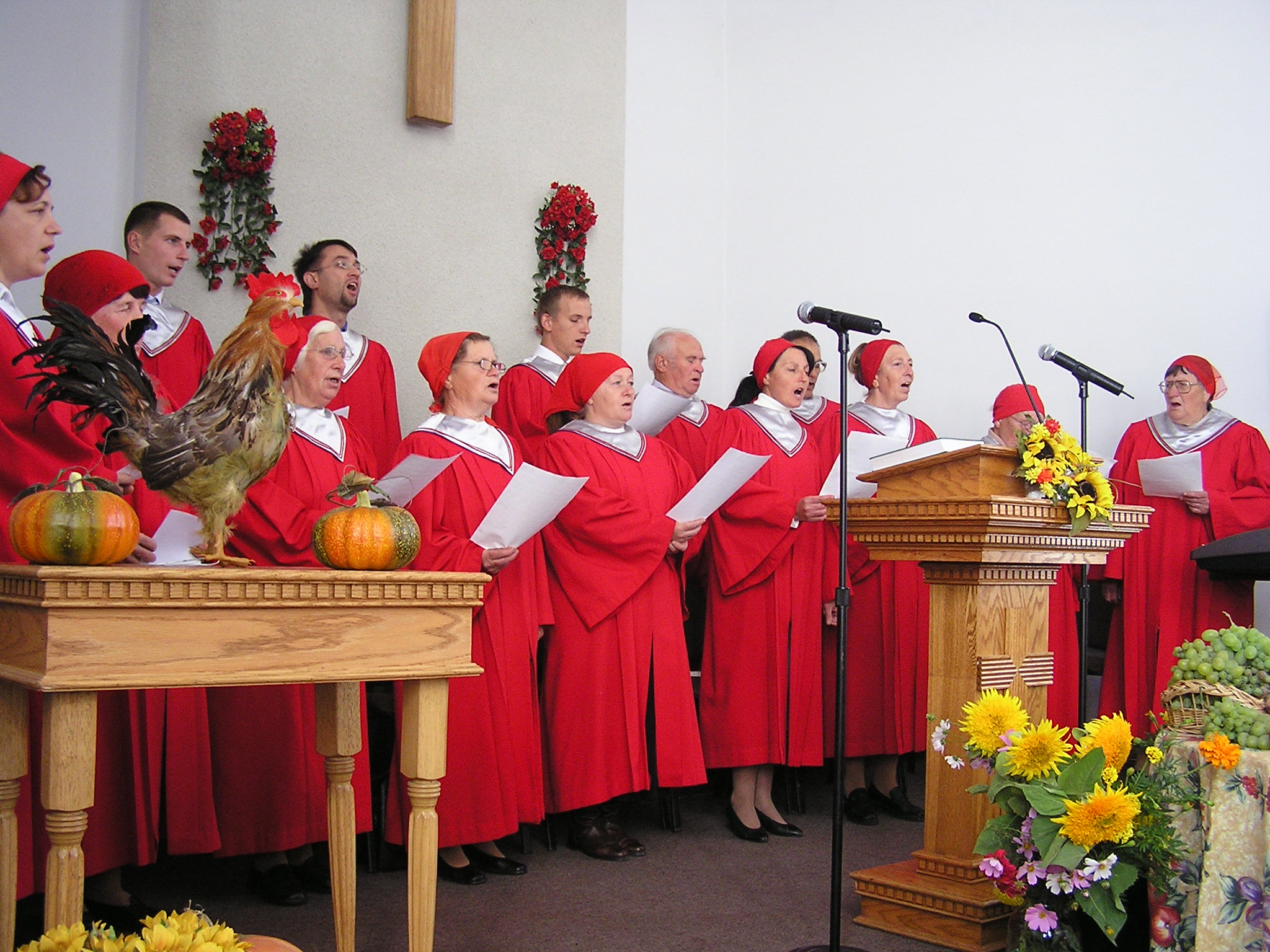
On Sunday I was asked to officiate at the communion service being held at Moworo where Obadia and Briskila are stationed. They participate in the Mahula pastor’s course. Rev. Likita was scheduled to preach and he brought an extra pastor’s robe for me. The church building is small so we had the worship service outside under the mango tree near the church. There was a nice breeze to go with it as a bonus because the temperature is about as high as it gets here this time of the year; 105- 110 degrees F, cooling to 90 on some nights. I was glad I did not have to put the pastor’s robe on until the communion service later held in the church building. We had 28 people at the communion service but only 20 cups so we did that part twice. I noticed that the church did not have benches, people sat on boards on the ground; we hope we will be able to change that. It was however a meaningful service; I gave up trying to read the form and its difficult Hausa and opted to explain the intent of the form in simpler Hausa, simpler for me. All in all both services were meaningful and uplifting. We were very glad to participate and I was glad to take that robe off but using it for the service was important to the people present. When in Rome do as the Romans do.
Congregational singingPastor Likita installing the new elder couple in this churchSpecial Number at the Communion serviceCollection timeReady to begin the communion serviceDistributing the elementsPhoto op after the service
Saturday we went to a wedding at Zuru about 1 hr.1/2 North of Mahula. We were invited but we were also asked to drive the groom and bride back to the groom’s place in Uva’di which is near Mahula. The wedding ceremony was to be held at the ECWC (Evengelical Church of West Africa) in Zuru. We were surprised at all the different churches in this average sized city. I was told that that most people in Zuru are Christians. Nothing starts on time in Nigeria but the first thing we heard from the ECWA pastor was that we were late and he had assumed we were no longer coming. Normally, one hour is not late. I think I got used to NCCN not starting on time. I was to go to the father of bride’s house to pick her up and bring her to church. The location of the house was not clear to anyone as far as I could see and if you have ever driven in the neighborhoods off the main road in Nigerian cities with narrow, partially blocked, and unmarked streets you know that I am talking about frustration. Finally, a couple of little kids eating mangoes showed us the way. The way was blocked by the vehicle that was to pick up her stuff. I parked off to the side only to be told by John and Obadiah the Evangelists accompanying me that we were being fined for being late, not us but the groom and that needed to be paid. Apparently, the bride refused to come out of her room. I made a comment about paying the driver. I wonder if that was not a ploy for cash by an enterprising family member. However, when they pulled the other vehicle out of the way and I backed into that spot to pick up the bride, the father came out and declared my vehicle unfit to take his daughter to the church. I thought I had seen it all! Somehow this was all resolved in short order by John and Obadiah and we were off to the church; bride, attendants, and a whole lot of other people. The wedding was typically Nigerian; a procession by the bride, attendants, and father into the church. The groom and bride sit in front of the pulpit facing the congregation while every group in the church is given a chance to sing a special number. If people like the song they come up and drop money at the feet of those singing and I assume this for the couple. Then there was a very appropriate sermon by the ECWA pastor (the bride’s pastor) on Proverbs 18:22. I was asked to pray for the couple; I had a hard time with it but not because of the Hausa language. Then it was Rev. Jolly Tonko’s turn, the Principle of the Bible School, to begin the official ceremony. He began with prayer, a declaration by the father, vows, exchange of rings, a demonstration of depending on each other, gave them the church’s certificate and a blessing. After the service we loaded up the bride, groom, and attendants for the hr.+1/2 ride to Uva’di. Matt. Lancer had also agreed to help out and he took all the Pastor’s, Evangelists, and wives back to Uva’di. What was amazing about that trip was that there was very little conversation but the maid of honor sang Christians songs for every bit of the hr.+1/2; We were impressed she knew so many songs from memory. Uva’di is about 10 miles from the main road and consists of many family compounds separated by each other’s fields. Compounds are far apart when compared to the city where they are right on top of each other. There will be a lot to get used to for this new wife but they both are Christians and the groom is a friend of Samson the Evangelist placed there. The bride is from a Christian family. The groom was a Muslim and married before with two kids but when he contracted polio and ended up with a severe limp his wife left him and took the kids with her. That difficult time opened up for him the way to become Christian Now that he is married we wonder if he will try to get his children back since they are being raised as Muslims. After I heard the whole story Gremar and I were glad to be part of this very important event. Gremar is the one taking most of the pictures.
Bride and attendantsBride and Groom
The older women of the compound throw dust on themselves to proclaim the bride acceptableEveryone wants to see the bride
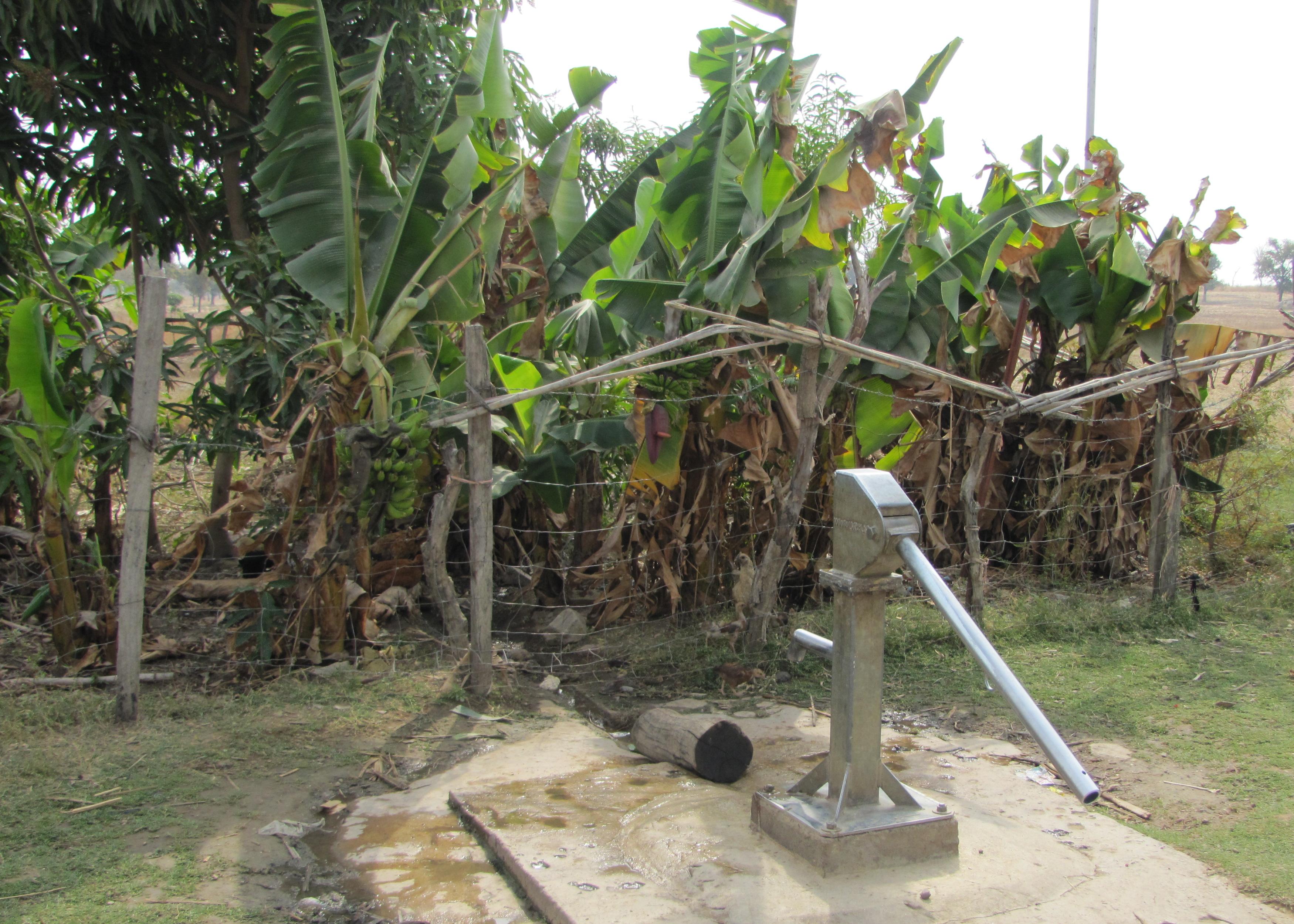
We have been talking about the need for water and for the need for wells and pumps. The organization that supplies clean water, spiritual water and other development is: http://www.waterwins.com The pictures you have seen about that work and the pictures with this post are people from that organization at work. Check out their webpage. The need for clean water and readily assessable water is acute as is the need to repair the pumps that are down. Not every village has the resources to keep the pumps maintained. We are thankful for the pump at Mahula it is now repaired so that I can pump directly into our overhead tanks at the same time everyone has free use. In this dry hot environment you learn to appreciate simply water; it is physical life as the Spirit is life for the soul. With out one or the other we die!
Jerimiah, Jammie and well crewPump crew at workGetting the Mahula pump back togather
Two weeks a ago the course at Mahula raised the question: How do new Christian converts interact with their relatives who are Tradition African believers? The issue comes up because when there is a death certain sacrifices are carried out. Sometimes the ceremony is postponed until an opportune time or until it involves more than one person. There was a ceremony held near here that was a huge affair because it involved seven people who had died in that family group. Many people spent two or three days in that compound. The issue for the new believer is involvement; not only in the ceremony but eating the food that is prepared. Some people thought that the food should be accepted but not eaten so as not to alienate the family. Others thought that all food should be refused upfront. After we pondered the question for a week and studied the pertinent passages we came back for further discussion. The two passages that stand out are I Cor. 8:1-13 and I Cor. 10: 14-32. In I Cor. 8 Paul gives no credit to idols in terms of defiling food but as is the case with new believers that is not yet understood. Therefore, in this passage Paul’s main concern is offending your fellow believer by not being careful about what you eat. In I Cor. 10 however Paul is concerned about food sacrificed to Satan. That is the main concern here as well. The animal is killed at the grave site; sacrificed in order to release the spirit of the relative. Food sacrificed to Satan we are not free to eat as Paul points out: Christians cannot eat and drink at the Lord’s Supper and participate in what is offered to Satan. The answer that we struggled with is as follows: We are to ask no questions if food is given to us by a traditional believing relative; if one is not told this food has been sacrificed at the grave site we are free to eat. But the new Christian and Christians in general must not participate in this spirit release ceremony and if they are told that the food brought to them was sacrificed at the grave site they must refuse it. This could also be an issue for Christians who buy meat in the market in this part of Nigeria because 99 percent of the time a Moslem Cleric prays over the animal before butchered. If we take Paul’s advice we ask no questions of conscience about the meat.
This week Sunday we are going to Idaci, we have been there only once but it is a growing place with a large church and a school. There is also a school in Maretu and Mazame where Bill and Alie Hart lived and worked. Dave and Jan Dykgraaf spent many years living and working in Idaci.
Today I am working on an Easter sermon for Idaci, of course the sermon is to be in Hausa but I need to reflect on it in English. Ps.118 is a prayer and a hymn of thanksgiving for salvation from the kings and the people’s enemies. I assume it to be a prayer of David but it could also be a liturgical hymn for one of the feasts. What is significant is that there are messianic elements proclaimed by the author under the influence of the Holy Spirit. I am only applying verses 21 – 26; certainly the cornerstone is God’s salvation; Jesus Christ confirmed in both the Old Test. Isa.28:16 and the New Test. I Pet 2:4-8. The Lord our God has done this and it is marvelous. In anticipation of Easter the Psalmist rejoices in the day of the Lord; “This is the day that Lord has made; let us rejoice and be glad in it”. Indeed, today is a day for rejoicing. Here also is echoed the cries of the worshipers at Jesus’ procession into Jerusalem proclaiming him King; the same people a day or two later scream “Crucify him! Crucify him!”
Fast forward Easter Morning. Matt. 28:1-10. Two women, both named Mary, followers of Jesus, head for the tomb but there is an earthquake at about the time they arrive. The soldiers sent to guard the tomb are lying on the ground as dead men. A powerful angel as bright as lightning had moved the stone and is sitting on it. The women stare in amazement. They are afraid but know they have no reason to be, God is good, merciful, compassionate, and is our salvation. “You are looking for Jesus, he is not here, and he has risen as he told you. Now go and tell his disciples” the angel commands them. Before they go very far Jesus meets them, when they realize it is Jesus they worship in awe. Are we in awe this Easter morning? Does our worship reflect our awe and joy? Jesus gives them a command as well: “Go and tell my brothers” He tells them to meet him in Galilee. When Jesus meets them he gives us all a command: “All authority in heaven and on earth has been given to me. Therefore go and make disciples of all nations, baptizing them in the name of the Father, the Son and the Holy Spirit, and teaching them everything I have commanded you. And surely I am with you always, to the very end of the age.” Are we listening?
Meeting with the leaders, IdaciIdaci church and primary school dormitoriesReady for church at Idaci.Women's group IdaciDrumer at the Easter service,IdaciSpecial Music Easter Service. IdaciThe Youth Group, Idaci
Friday, 3/26 Case and I with a carload full of happy women and children drove to Maretu for the Women’s Revival Meeting. Can you picture this, one man, thirteen women and 6 babies all loaded up in the pickup to drive for 2 1/2 hr over bumpy ,dusty, hot roads to a little village in the middle of no where. We arrived about 3:30 plenty of time for Case to drive back home since no one drives here in the dark. Women came from all the churches in this classis, and filled the local school of two classrooms with sleeping mats, rice, guinea corn, oil, cooking pots and personal belongings. I had fully expected to sleep with the women on the cement floor and had even bought a sleeping mat, but was brought to the evangelists home to sleep in their guest room, on a water bed mind you that was left by the former missionaries there. (Larry/ Rose Van Zee lived here for 23 years, quite an achievement.) Grace, the evangelists wife mentioned that at night I would see ????? but not to worry, so I didn’t ask what the ???? was since she had said I wouldn’t have to worry about it. The first meeting was to start at 8 PM but by the time supper was cooked for about 100 women and children, the meeting started at 10PM. One of the pastors spoke a great message of encouragement for all of us and then drums, dancing and singing. By midnight I decided to turn in. Sleep wouldn’t come, the strangeness, the drums, and then I heard some scratching and running across the rafters and tops of the mud block walls and I saw the ?????, with beady little eyes looking back at me, yes rats, not just one or two, but families of them busy scurrying here and there, jumping down onto my bag hanging on a nail on the wall, and scooting out of a large hole in the screen. Since it was about 95 degrees with not a breeze I couldn’t even hide under the blankets, but pray I did! I woke up with the roosters crowing with not a rat in sight, and told everyone I had a great night.
Saturday, first meeting at 9AM, lots of singing and another speaker, food was cooked at 11, and yours truly spoke at 3 PM. There are 3 local congregations in this regional church area with many preaching centers in each center. There was a singing contest that afternoon of the 3 congregations, and it was great to see the dancing along with the singing. Another meeting after supper at night starting a 9PM followed with more drumming, dancing and singing. I joined for about an hour, it was wonderful to see everyone praising God, many of these women being first generation Christians. I slept a little better that night knowing that our friendly rats were really not interested in me. Sunday morning the church was packed to many standing by the windows, Case had also come to pick us up. It was a great time of worship and fellowship!
Loaded ready to goBreakfast is servedThe women's revival meeting
Some of the partisapentsKitso anyoneSingers and dancers, MaretuThe place is packed.This lady looks very muslem but is a ChristianThe singing compatition
This week we returned from Taraba State. 2475 Kl. is a long way in this country. But we are thankful to God for a safe trip and for meeting many of the people we know in the places we worked in the past. We did not meet everyone we wanted to but time was not on our side. It was very hot when we left Niger State about 108 degrees daily and 90 at night. But as we went south things started to cool off to around 80 degrees, we are blessed with air in the vehicle so that was a help, and all the hotel accommodation were air conditioned. Besides that harmattan blew in so thick it reminded me of times in the past when we grounded the airplanes due to lack of visibility. Harmattan also keeps things a lot cooler. Over all it was a very good trip. The one goal we had was to see Pastor Nahum and Maryamu at Akwabe. He has a phone but no reception there so we tried to contact Pastor Ishaya Nahum, their son, but to no avail. We staopped at Mina, Mukurdi, Wukari, Takum, Kungana, Marrarba, Tatin Ndoro (where Ishaya is the pastor) Baissa, Sabon Gida Akwanwe, and Akwabe. As it turned out a two track was just completed to Akwabe because a team of engineers went to check out a dam site. Unexpectedly we could drive right to the river and walk across to Akwabe. On top of that the Regional Church Council was having a revival meeting there so we got to see people we did not expect to see. God is good. Good in more ways than one as it turned out because a couple of hours after arriving I came down with an intense fever, vomiting and diarrhea that gave us a good scare thinking it would be awhile before we would be able to travel again. We could not go to the service that night but thanks to God and Gremar who always packs medicine wherever she goes; I recovered during the night, nothing short of a miracle, and was able to bring greetings at the morning worship service on Saturday. We had to leave again at noon so as to make it back to Niger State by Monday afternoon. The way back was uneventful but we were not looking forward to the heat; harmattan had blown in at Mahula as well and it was about 97 degrees when we arrived home, almost cool. The dust is still here and it is much cooler now at night. The following pictures are of our trip.
A load of peanutsCocoa the main cash crop in Sobon Gida Akwanwe and the surrounding areaA load of tiresIt has started rain in Sobon Gida.Ishaya Nahum and family at Tatin NdoroThe rain forest at Baissa / AkwanweBringing greetings to people at the revival meetingAkwabe, The band is at the readyThe Women's sectionThe Men's sideUsing a traditional stringed instrument for the serviceNo more grinding by handThe towns we traveled through the streets are busySolar powered Street light, MakurdiWhy not the whole family?The local restaurantDried bush meat and fish ready for the soupHarmatan dust in the house after six days of travel
We have been in the dry season for 5 months and do not expect rain until the end of march This area is rolling savanna scattered with 1500 ft rocky out cropping like they were pushed up out of level ground. (see photos and Map) It is extremely dry right now but I am told that by the end of march the rains will begin with an annual rain fall of about forty inches. This is the time when people rebuild their grain storage binds, repair their corn stalk fences, get grass to repair their roofs, gather firewood and make mud block to build with. People also have cassava plots in the dry season. But it is not always dry I include a picture of the rains.
Fog? No, Harmatan dustA lot more clouds now daysThe river at Komfoni (see map) is completely dryA dry season casava patch proteced fron cattle and goatsEveryone is looking for water at the pumpDry season is a time to gather grass for the roof repairAnd a time to make building blockDry Season A time for courses and gatherings.Whatever these ants were after they cleared a trail to get to itFlowers out of ashesA preview of the rainy season God willingNo lack of water at the hotel along the Benue river
Yesterday we traveled to Honu where Yusufu Joseph and Saratu (Sarah) work it is a long ways away, see map (upper left) but it is off the map. I have revised the map to reflect the reality of the work. Now there are 11 more churches and more workers. There has , been much progress in spreading the Gospel. Honu is one of those new places. A bore hole was dug there three years ago and now a small church has started. The first thing that happened when the evangelist arrived is that his wife lost their new baby. After that a violent storm took off the roof of the church and knocked down most of the walls. The church is rebuilt but no roof yet and that is why we came with other church members from RCC (Reginal Church Council) Niger. It took us three hours to get there due to the bush road, then being directed to the wrong church, and then not being able to climb the far back of the river so that we had to walk a 1/2 a mile. I forgot my hat and got properly burned. The sun was brutal. The service was outside (see pictures) but it was a success, we raised enough to get the roof put on, about 50,000 Niara. After a meal of rice and goat meat we headed back. On the way back we picked up people from Idaci who were on the way to Honu but their vehicle had broken down. We got home just before dark, all in all it was a good day but we hope we do not have many more days this long and this hot.
CRCN RCC Niger church locations and worker locations
In our lesson on Crisis Visits, we read a passage from Mathew 25: 35-36. The point is that there are people in need in every culture, society, and country. The point of Jesus’ words in Matthew 25 is the end times and what the Kingdom of Heaven is like. When it comes to people in need the Kingdom of Heaven does not differentiate because when we help those in need it is the people we help and by helping them it is Jesus we serve. What Jesus says in verse 35-36 is a surprise to Christians who see addressing people’s needs as a way of serving. Lord, they say: when did we see you in need? Jesus replies: what you did for the least of these brothers (sisters) of mine you did for me. That puts crisis visits and addressing the needs of people we visit in a whole different perspective and it convicts us as well. How easy it is to say what the other group says, in fact they repeat what the first group asks Jesus: Lord, when did we see you in need? When we justify our refusal to help with; let them get a job, or they refuse to work, or it is drink or drugs that cause these needs we miss the point of serving. There are reasons that course needs among people but it is never that simple and there still are real needs in families no matter what their situation. We need to recognize those needs and extend a helping hand that must include rehabilitation, directing people to agencies that can help and we must meet that immediate need. There is nothing easy or clear cut about it, yet it is urgent because we know what Jesus says to that second group in the passage. He says: as much as you did not do anything for them you did not do it for me. May Jesus not have the occasion to say that to us?